Business overview:
The enterprise has over two decades of operating experience across food processing, consumer products and specialised manufacturing. It is an established Indian consumer and food-related enterprise with a diversified operating presence across specialised manufacturing, food processing, packaged consumer products, nutritional products and organised food service operations. The enterprise has developed capabilities across product formulation, manufacturing, customised production, institutional supply and consumer-facing business operations. Its operating platform combines product development capabilities, process standardisation, manufacturing infrastructure and organised distribution and service channels.
Over the years, the business has evolved through multiple operating cycles, including a strategic restructuring phase, with a renewed emphasis on process efficiency, proprietary product development, operational standardisation and scalable business formats. During the pandemic period, the enterprise experienced significant business disruption, in line with broader challenges affecting the food service and hospitality industry. Subsequently, the business undertook operational restructuring and repositioned its strategy towards a more process-oriented, standardised and operationally controlled business model. This transition has involved prioritising sustainable operations, proprietary product development, improved cost structures and stronger internal processes.
The enterprise has progressively expanded across several complementary segments, including specialised food and consumer product manufacturing, contract and customised manufacturing, nutritional and wellness product development, packaged consumer products, organised food service operations, and institutional and business-to-business supply. The business has developed experience in handling customised product requirements, formulation development, manufacturing processes and quality-oriented production. It has also established business relationships across domestic and international FMCG, food, pharmaceutical and consumer sectors, along with experience in contract research, customized product development and manufacturing.
Specialized manufacturing and food processing:
The manufacturing vertical focuses on developing and producing specialized consumer and food-related products. Its key capabilities include processed and prepared food products, specialized ingredient formulations, dry-blend and ready-to-prepare products, seasoning and customized formulations, nutritional and wellness-oriented products, contract and private-label manufacturing, and institutional and customized production requirements. The enterprise has developed a diversified portfolio of approximately 200–300+ product SKUs across its operating categories. Its manufacturing capabilities provide opportunities to serve institutional customers, distributors, organised retail businesses and other consumer-facing enterprises.
The enterprise has developed a diversified portfolio of 250–300+ food, beverage and nutritional product SKUs, with indicative annual manufacturing capacity of approximately 4,000–5,000 MT and scope for expansion. Dedicated product development capabilities are supported by R&D and quality control infrastructure. Manufacturing standards are supported by food safety and GMP-related certifications and registrations, subject to verification. Current manufacturing capacity utilisation is estimated at below 10%, indicating significant available capacity for incremental production and potential operating leverage.
Product development and proprietary formulations:
An important capability of the enterprise is its focus on product formulation and process development. The business has invested in developing proprietary preparation systems and standardised formulations that can support consistent product quality and efficient execution. These capabilities are relevant to both manufacturing and consumer-facing operations. The focus is on developing differentiated product formulations, standardising production and preparation processes, improving product consistency, reducing operational complexity, supporting repeatable production and service delivery, and creating opportunities for future product extensions.
Organised food service operations:
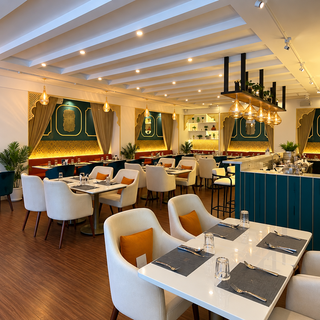
The enterprise also operates in the organised food service segment through a standardised operating model. The business focuses on consumer-facing food service formats supported by structured preparation processes, internal product development and operational controls. Its model incorporates standardised preparation systems, controlled product specifications, defined operating procedures, employee training and development, operational monitoring, quality and consistency controls, and cost and wastage management.
The business is progressively prioritising greater operational ownership and control, with an emphasis on building a more consistent and professionally managed outlet network. Its technology-enabled restaurant model incorporates standardised formulations, proprietary preparation systems, employee training and digital operating processes. One operating outlet reportedly served approximately 4–5 lakh customers over 15–18 months.
Packaged consumer products and distribution:
The enterprise has capabilities in developing and supplying packaged consumer products through multiple commercial channels. Potential distribution channels include general trade, modern retail, institutional customers, business-to-business distribution, online commerce and quick-commerce platforms. The objective is to strengthen the commercial reach of its product portfolio and develop additional recurring distribution opportunities.
Operating model and process differentiation:
The enterprise's operating strategy is based on reducing operational dependence on individual skilled personnel through standardisation and process-led execution. Its approach combines internal product formulation and development, standardised preparation and production systems, documented operating procedures, structured employee training, defined quality control processes, and operational monitoring and cost management. This approach can support consistency across multiple locations and production activities while improving the ability to replicate operating processes.
The enterprise follows a relatively flexible infrastructure model, using leased operating premises and a trained workforce, thereby allowing management to focus on operating efficiency and business expansion. The diversified business model spans contract manufacturing, packaged consumer products and organised food service operations.
Human resources and workforce development:
Workforce development is an important component of the enterprise's operating strategy. The business emphasises structured employee training, process-based workforce deployment, skill development and operational learning, greater workforce participation, employment opportunities for women, and standardised operating responsibilities. The model is intended to reduce dependence on highly specialised manpower and improve workforce productivity through training and defined operating systems. The enterprise also has an experienced management and advisory ecosystem with over 150–175 years of cumulative experience.
Historical financial performance – indicative:
The enterprise has experienced different operating cycles, including a period of stronger business performance followed by pandemic-related disruption and subsequent restructuring. The indicative historical peak annual revenue was ₹15–25 crore, while the indicative current revenue scale is ₹5–10 crore.
The historical peak revenue and current revenue ranges are indicative estimates for preliminary screening, not representations of audited financial performance. Detailed segment-wise revenue, EBITDA, PAT, working capital, debt obligations and cash flow information would be evaluated during financial due diligence.
Current business priorities:
The enterprise is currently prioritising consumer-facing business expansion by strengthening the organised food service vertical through company-controlled operations and a structured expansion strategy. It is also focused on institutional and B2B business by developing additional institutional relationships and expanding business opportunities in the HORECA and related supply segments. Manufacturing development remains another priority, with an emphasis on improving utilisation of existing capabilities and pursuing selective contract manufacturing opportunities.
The business is also focused on distribution expansion by increasing the reach of packaged products through organised retail, digital commerce and emerging distribution channels. Operational strengthening through investments in management capabilities, workforce development, technology and internal operating systems is another key priority.
Growth strategy and outlook:
The proposed growth strategy is focused on building a more integrated consumer and manufacturing enterprise. Key growth initiatives include expanding consumer-facing operating locations, strengthening existing business channels, improving manufacturing utilisation, developing new product categories, expanding institutional and distribution relationships, strengthening technology and operational infrastructure, improving workforce productivity and management systems, and developing scalable and repeatable operating formats.
The enterprise intends to balance consumer-facing expansion with its existing manufacturing and product development capabilities. It is focused on expanding consumer-facing operations, improving manufacturing utilisation, strengthening institutional business, developing its product portfolio and leveraging technology to improve operational efficiency and scalability.
Indicative investment requirement:
The enterprise is exploring growth equity to support its next phase of business development. The indicative capital requirement is ₹25.64 crore, with an indicative enterprise valuation of ₹285 crore. The proposed transaction structure is equity participation, with the investment intended for business expansion and growth. The enterprise is open to strategic and financial investors.
The final investment structure, valuation, ownership participation and transaction terms will be subject to discussions with prospective investors and satisfactory due diligence.
Potential investor categories:
The opportunity may be relevant to strategic investors, including consumer products companies, food processing and manufacturing groups, organised food service operators, and institutional supply and distribution businesses. It may also be relevant to financial investors, including consumer-focused private equity funds, growth capital investors, family offices, private investment groups and long-term strategic investment partners. Investors with experience in consumer businesses, operational scaling, manufacturing and organised distribution may be particularly relevant.
Transaction process and confidentiality:
This opportunity is being circulated as a strictly blind investment teaser for preliminary investor evaluation. Company and promoter identities, brand and product names, specific customer and institutional relationships, exact operating locations, detailed historical business milestones, identifiable manufacturing and operating references, and corporate and statutory identification details are intentionally withheld.
Further information, including the detailed business profile, audited financial statements, corporate structure, management details, operating infrastructure and transaction documentation, will be made available only through an authorised and controlled disclosure process, subject to appropriate confidentiality arrangements.
All figures are indicative, rounded or expressed as ranges for blind investor circulation. Company, promoter, brand, customer and location identities are withheld. Financial, operational and certification details remain subject to due diligence. All financial figures and business parameters presented are indicative ballpark estimates and must not be treated as audited, independently verified or binding transaction representations.