India keeps looking for the next big company: the next Tata, the next Reliance, the next Infosys, the next startup unicorn.
But sometimes, the biggest opportunity is not big at all. It is small: the thousands of small factories, workshops, warehouses, and offices that quietly keep India’s economy moving.
India has spent decades talking about becoming a manufacturing powerhouse, a startup nation, a global export hub, and a $5 trillion economy. We have spoken about competing with China. We have spoken about creating jobs, reducing inequality, increasing exports, and moving people out of agriculture. But the real vehicle for all of this was always MSMEs.
And we did not give them the attention they deserved.
We cheered for the giants and romanticised the startups, but ignored the middle.
India’s economic conversation is dominated by two extremes.
At one end are large conglomerates. They receive policy attention, capital, visibility, land, incentives, and access.
At the other end are startups. They receive media attention, venture capital, conferences, and glamour.
Between these two sits the MSME owner.
He may not be famous, fashionable, or fluent in business jargon. But he employs people. He manufactures. He pays wages. He manages suppliers. He understands customers. He survives without burning investor money. And he makes a real difference to the national economy.
And yet, he is ignored as a small business.
That is the problem.
Why MSMEs Matter?
India is one of the world’s largest MSME ecosystems, with over 7 crore enterprises they employ over 60% of the workforce, contribute 50% of exports and account for 30% of the GDP.
The scale is undeniable.
India still has too many people dependent on agriculture for too little income. The solution is not simply to move everyone into software, finance, or large corporate jobs. That is impossible.
The natural bridge from agriculture to industry is the MSME sector.
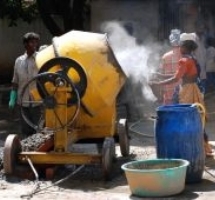
Small factories, repair units, logistics firms, engineering workshops, textile units, food-processing businesses, packaging companies, and component manufacturers can create jobs close to where people live.
MSMEs can create jobs in small towns. They can build local supply chains. They can turn agricultural regions into industrial regions. They can create a large, productive middle class.
That is how countries like Germany, Switzerland, Italy, and Taiwan became wealthy: they built ecosystems where thousands of small and medium-sized firms could grow, specialise, and become globally indispensable.
Why Taiwan Is a Better Model for India Than China?
India often compares itself with China. That comparison is useful, but incomplete.
China became the factory of the world through massive scale: large factories, huge infrastructure, aggressive state support, export zones, and disciplined execution. That model worked for China.
But India is a democracy of many states, each with its own culture, politics, strengths, and constraints. It cannot be standardised and commanded from the top like China.
Taiwan offers a more relevant lesson.
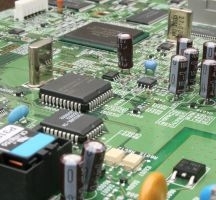
Taiwan is often reduced to semiconductors and the success of TSMC. Long before semiconductors defined its global position, Taiwan had already built deep MSME capabilities in precision engineering, machine tools, electronics components, bicycles, industrial hardware and advanced manufacturing. None of these firms are household names but they deep inside global value chains of everyday products we use across the world.
Taiwan’s model was not just scale. It was specialisation.
One company made a component. Another improved a process. Another supplied a global brand. Another became a contract manufacturer. Another built a niche machine. Another solved a small but difficult engineering problem.
Together, they formed clusters. Knowledge moved quickly. Skills improved. Quality standards rose. Export networks deepened.
That is the lesson India should study.
Taiwan Did Not Just Create SMEs. It Converted Them.
Taiwan has around 17 lakh MSMEs. India already has 7 crore MSMEs.
The difference is this: Taiwan built an ecosystem that converted small firms into global suppliers of specialised, high-quality products. They were expected to think globally early because Taiwan did not have a huge domestic market where inefficient firms could hide forever. Exporting was not just a growth strategy. It was survival for Taiwanese SMEs.
Firms had to improve quality. They had to meet global standards. They had to learn foreign buyer expectations. They had to specialise. They had to collaborate. They had to upgrade technology.
India’s large domestic market is both a strength and a trap. It allows small businesses to survive. But it also allows many of them to remain comfortable without upgrading. A firm can grow inside India without ever learning global standards, export documentation, product certification, packaging norms, buyer relationships, or international quality expectations.
Taiwan built conversion.
India has mostly built creation.
What Taiwan Got Right?
Taiwan understood that SMEs do not become globally competitive in isolation.
It built dense industrial clusters where manufacturers, suppliers, training institutes, testing facilities, and exporters worked in close proximity. This allowed skills, technology, and quality standards to spread quickly.
More importantly, the state did not treat SMEs as suspects. It helped them upgrade through practical support: better infrastructure, technical education, export connections, quality certification, flexible rules, and non-intrusive audits.
In Taiwan, the system rewards a small business for becoming formal. In India, registering often invites the “Inspector Raj,” a barrage of scrutiny from labour, environmental, and municipal inspectors.
That is the difference India must understand.
Where India Fails Its MSMEs?
India’s MSMEs do not lack intelligence, hustle, or entrepreneurship.
At SMERGERS, we speak to hundreds of small business owners each week, and we know how sharp they are. They understand costs better than MBAs. They understand customers better than consultants. They can produce products with limited resources. They can negotiate, design, build, sell, and survive. They thrive in spite of the system, not because of it.
Unreliable infrastructure, delayed approvals, tax uncertainty, poor credit access, and compliance burdens drain their time and confidence. For a small owner, every approval, inspection, notice, and unnecessary compliance requirement is not a minor inconvenience. It is time stolen from growing his business.
A large company can hire lawyers, consultants, accountants, and compliance teams.
A small business owner cannot.
Imagine what such people could do if the system actually supported them.
India Already Has the Raw Material
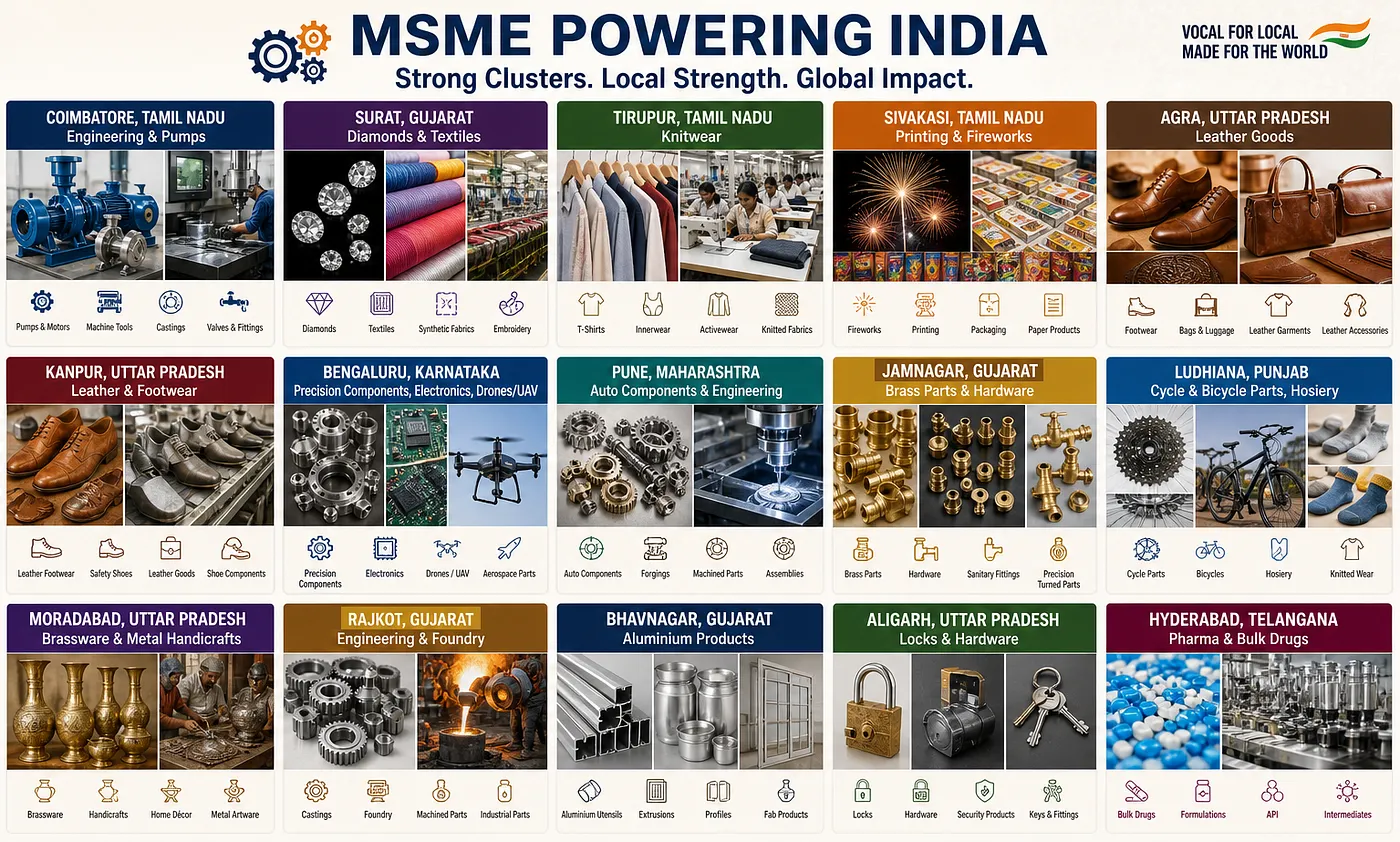
India already has strong clusters. For example, Coimbatore has engineering and pumps, Surat has diamonds and textiles, Tirupur has knitwear, Sivakasi has printing and fireworks, and Agra and Kanpur have leather ecosystems. But a real cluster is not just a group of factories in one place.
A real cluster has common testing labs, design centres, tool rooms, export desks, packaging support, logistics infrastructure, finance access, research links, training institutes, and quality certification systems.
Firms compete, but they also learn from each other. Workers move across firms. Suppliers improve with buyers. Local schools train for local needs. The government solves bottlenecks quickly.
That is what India must build.
What India Should Do?
The goal should be clear: turn thousands of Indian MSMEs into global specialists.
First, build cluster-specific infrastructure. Each cluster should have reliable power, roads, water, drainage, warehousing, testing labs, design facilities, machinery suppliers, export logistics, and vocational education linked to the needs of local MSMEs.
Second, teach MSMEs global quality standards. Many small businesses do not fail in global markets because their products are poor. They fail because they do not meet the documentation, certification, tolerance, packaging, safety, traceability, or delivery standards expected by global buyers. The government should help firms understand and meet these standards before expecting them to export.
Third, reduce compliance and corruption. This is non-negotiable. MSMEs need fewer filings, simpler rules, consistent tax policies, time-bound approvals, and faceless, data-driven audits. Smaller firms also need labour laws suited to their scale; a 40 worker factory cannot be regulated like a 40,000 worker corporation. Protect workers, but do not kill job creation. The goal should be to catch fraud without harassing honest businesses. Enforcement should be firm, not frightening.
Fourth, act as a global B2B matchmaker. Small Indian manufacturers should not have to discover buyers in Germany, Japan, the US, or Southeast Asia on their own. India should build serious export matchmaking platforms for MSMEs. Embassies, trade bodies, export councils, and digital platforms should work together to connect Indian firms with global supply chains.
Fifth, fix finance and land access. MSMEs need capital for automation, machinery, technology upgrades, and expansion. Banks must move beyond collateral and use GST data, invoice history, cash flows, and digital payments to assess creditworthiness. India must also make it easier for genuine businesses to access land for setting up or expanding units. No MSME can become globally competitive if it cannot finance growth or find a place to build.
India Can Create 28 Taiwans
Taiwan is an island country with around 2.3 crore people. But it built one of the world’s most impressive export-driven economies by turning small firms into global specialists.
India has 28 states with an average population of 5 crore people.
Each Indian state can build its own Taiwan.
Tamil Nadu can build one around engineering, textiles, electronics, and auto components. Gujarat can build one around chemicals, ceramics, machinery, and pharmaceuticals. Maharashtra can build one around auto, precision manufacturing, and industrial services. Punjab can build one around light engineering, bicycles, food processing, and farm machinery. Karnataka can build one around electronics, aerospace, machine tools, and deep-tech manufacturing. Uttar Pradesh can build one around leather, defence components, food processing, textiles, and electronics. Rajasthan can build one around stone, minerals, handicrafts, solar components, and engineering goods.
Every state has a base. Every state has entrepreneurs. Every state has local skills.
What is missing is the Taiwan-like ecosystem: clusters, infrastructure, training, quality, finance, export matchmaking, and low friction governance.
Taiwan is a global MSME powerhouse today. India can build 28.
If every Indian state builds its own MSME ecosystems, its own specialised clusters, its own export niches, and its own globally competitive small businesses, India’s future will not depend on a few giant companies alone.
It will be built by thousands of firms the world cannot easily replace.
That is the opportunity India has missed.
And that is the opportunity India can still seize.
Also available on Medium